
For most people today, it’s hard to imagine daily life without a car. A reliable vehicle provides comfort, practicality, and freedom of movement. However, not everyone can afford to buy a brand-new car from a dealership. That’s why the used car market remains extremely popular.
But buying a pre-owned vehicle comes with hidden risks.
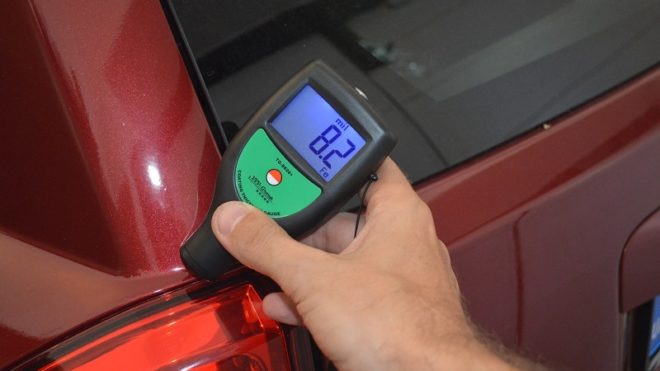
Even if a used car looks perfect on the outside, a shiny body panel doesn’t tell you the full story. It is almost impossible to visually determine whether the vehicle has been in an accident, how serious the damage was, or whether the body has been repaired and repainted. In situations like this, a paint thickness gauge becomes one of the most useful inspection tools you can bring with you.
A paint thickness gauge is a non-destructive measuring device that helps you check the thickness of paint and coatings on metal surfaces — and detect hidden repairs.
What Is the Danger of Buying an Accident-Damaged Car?
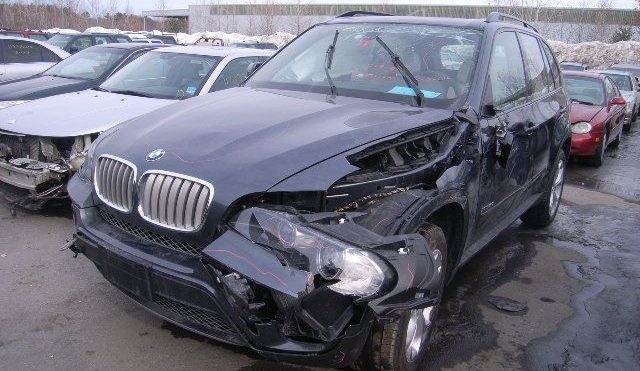
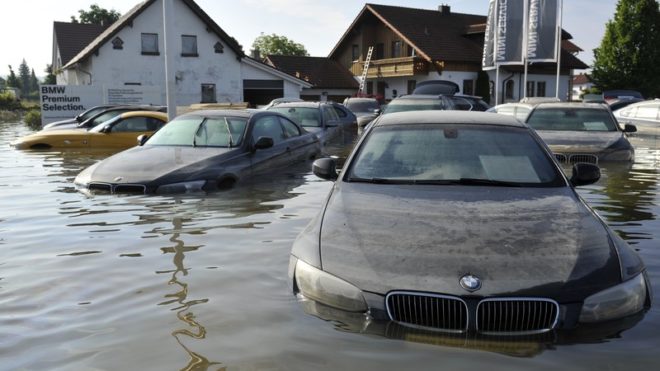
When purchasing a car that has been repaired after a crash, you may face unpleasant surprises later.
For example, repaired areas can develop:
-
corrosion on metal parts
-
peeling paint or clear coat
-
cracking or separation of body filler (putty) layers
In some cases, even a strong jet of water at a car wash can remove a large layer of paint applied over damaged areas. This might not cause an immediate mechanical breakdown, but it can seriously disappoint the new owner and reduce the vehicle’s resale value.
Even more importantly, if the car’s body geometry was damaged during an accident, the consequences can appear over time. Parts that are no longer aligned correctly may experience increased stress, faster wear, and unexpected failures. This leads to ongoing repair costs — and may also raise safety concerns on the road.
That’s why professional engineers carefully design and calculate vehicle structures: even small deviations can cause long-term problems.
How Can a Paint Thickness Gauge Help?
Many automotive experts recommend approaching a used car purchase responsibly. One of the smartest steps is to bring a digital paint thickness gauge with you during the inspection.
The good news is that these devices are easy to use — even for non-professional drivers.
How it works (simple steps):
-
Turn on the device using the button on the front panel
-
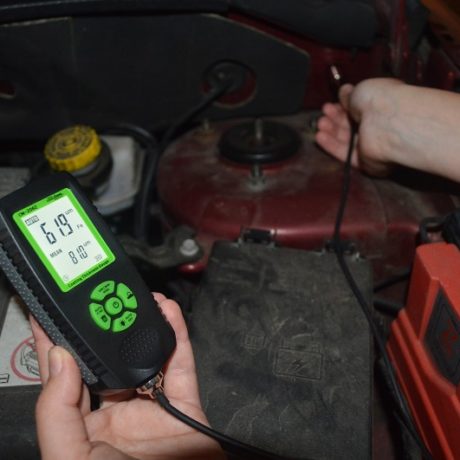
Place the measuring probe on different body panels
-
Within seconds, the screen shows the paint thickness readings for each area
To get accurate results, measure the parts that are most often damaged in accidents, such as:
-
doors
-
fenders
-
hood
-
trunk lid
-
roof pillars
-
quarter panels
Modern paint thickness gauges from reputable manufacturers offer high precision and minimal error, so the results are reliable.
How to Interpret Paint Thickness Readings
So how do the numbers help you make the right decision?
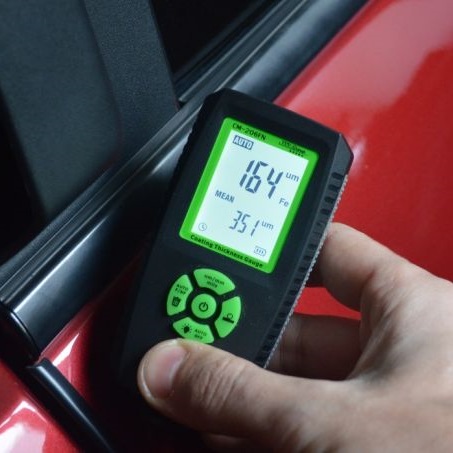
A key indicator is the difference in paint thickness between opposite sides or different areas of the car body:
-
If the difference is within 15 microns, the vehicle is likely in good condition and has not been repainted significantly
-
If the difference is around 200–300 microns, the car has most likely been repainted and repaired multiple times
This is one of the fastest ways to detect bodywork and understand whether the vehicle has been involved in accidents.
Built-In Probe vs External Probe: Which Paint Gauge Is Better?
Today, digital coating thickness gauges for car inspection are usually available in two formats:
1) Built-in (integrated) probe models
These are typically the most compact, durable, and practical option. They are easy to carry and ideal for quick inspections.
2) External probe models
These gauges allow you to measure paint thickness in hard-to-reach areas where a built-in probe may not fit. This makes them especially useful for detailed inspections and professional use.
Final Tips: How to Choose the Right Thickness Gauge
When choosing any paint thickness gauge, experts recommend checking the technical specifications and comparing the price-to-quality ratio.
A reliable thickness gauge helps you:
-
avoid buying a heavily repaired vehicle
-
detect repainting and body filler
-
reduce the risk of unexpected repair costs
-
make a confident, informed purchase decision